Repeatable measurement
Good repeatability and temperature-humidity characteristics.
Combustible and Toxic Gas Detection
Gas-sensitive elements and microcontroller technology continuously monitor combustible and toxic gases in industrial and commercial sites.
Product Overview
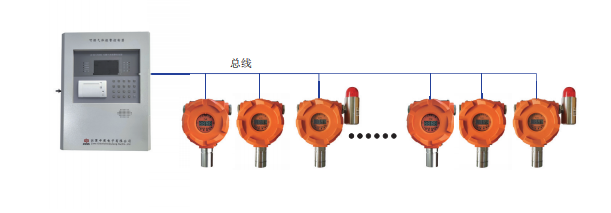
The product is designed with reference to GB 15322.1-2019 and GB/T 32209-2015. Detectors work with a gas alarm controller for field sensing, centralized alarms and linkage.
Good repeatability and temperature-humidity characteristics.
Supports monitoring of combustible and toxic gas risks in industrial conditions.
Select combustible, toxic or oxygen detectors around the scenario.
Waterproof, explosion-protected construction.
Applications
For production, storage and enclosed spaces with leakage, accumulation, oxygen deficiency or oxygen enrichment risks.
Compressors, pumps, sampling points, vents, flanges and valve groups.
Production areas with toxic, hazardous or process-gas risks.
Monitoring combustible and toxic gas concentrations.
Gas compartments and spaces subject to accumulation or oxygen imbalance.
Specifications
The following key technical data supports product evaluation and preliminary selection.
Note: Final model, configuration, parameters and certification status are subject to confirmed product documents, test reports and project selection.
Installation
Mounting height and location depend on gas density relative to air, release sources, ventilation and applicable design standards.
Documents
Product brochures, test reports and installation documents will be provided after their approved disclosure scope is confirmed.
Product Enquiry
Protected area, route length, environmental conditions and existing alarm-system information help us understand the requirement.